Trail vs. Castlegar, BC: A Straight-Talk Comparison for People Planning to Move
Buyers compare Trail and Castlegar all the time. Both are practical West Kootenay communities, both offer access to the outdoors, and they’re only about 30 minutes apart. But they feel quite different once you live here.
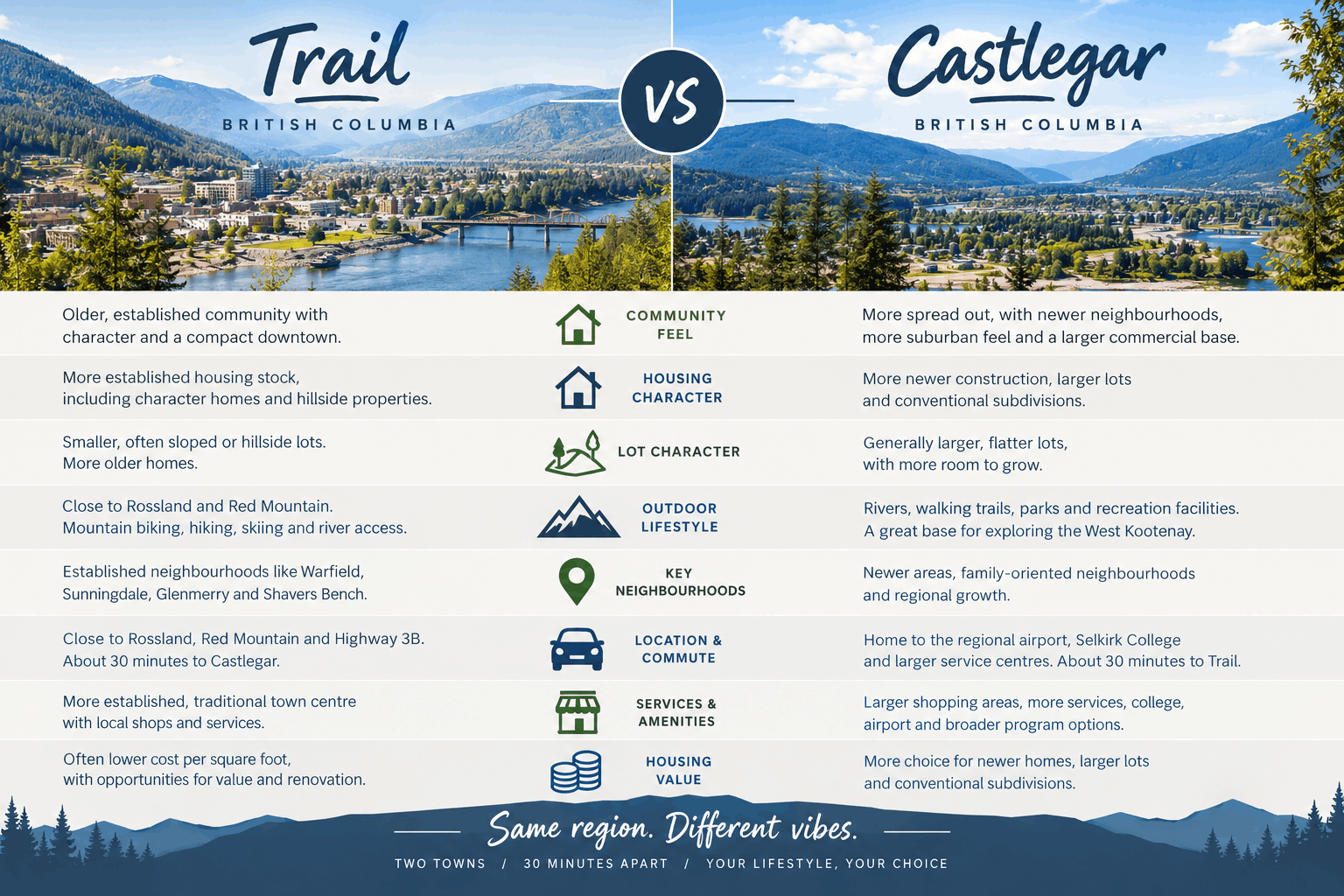
Castlegar gives you more space, newer neighbourhoods, the airport, Selkirk College and a broader selection of everyday services. Trail gives you a more established community, older neighbourhoods with character, a compact downtown and a strong connection to the surrounding mountains and river valleys.
Neither is automatically the better choice. It really comes down to how you want to spend your everyday life.
What Actually Separates Trail From Castlegar?
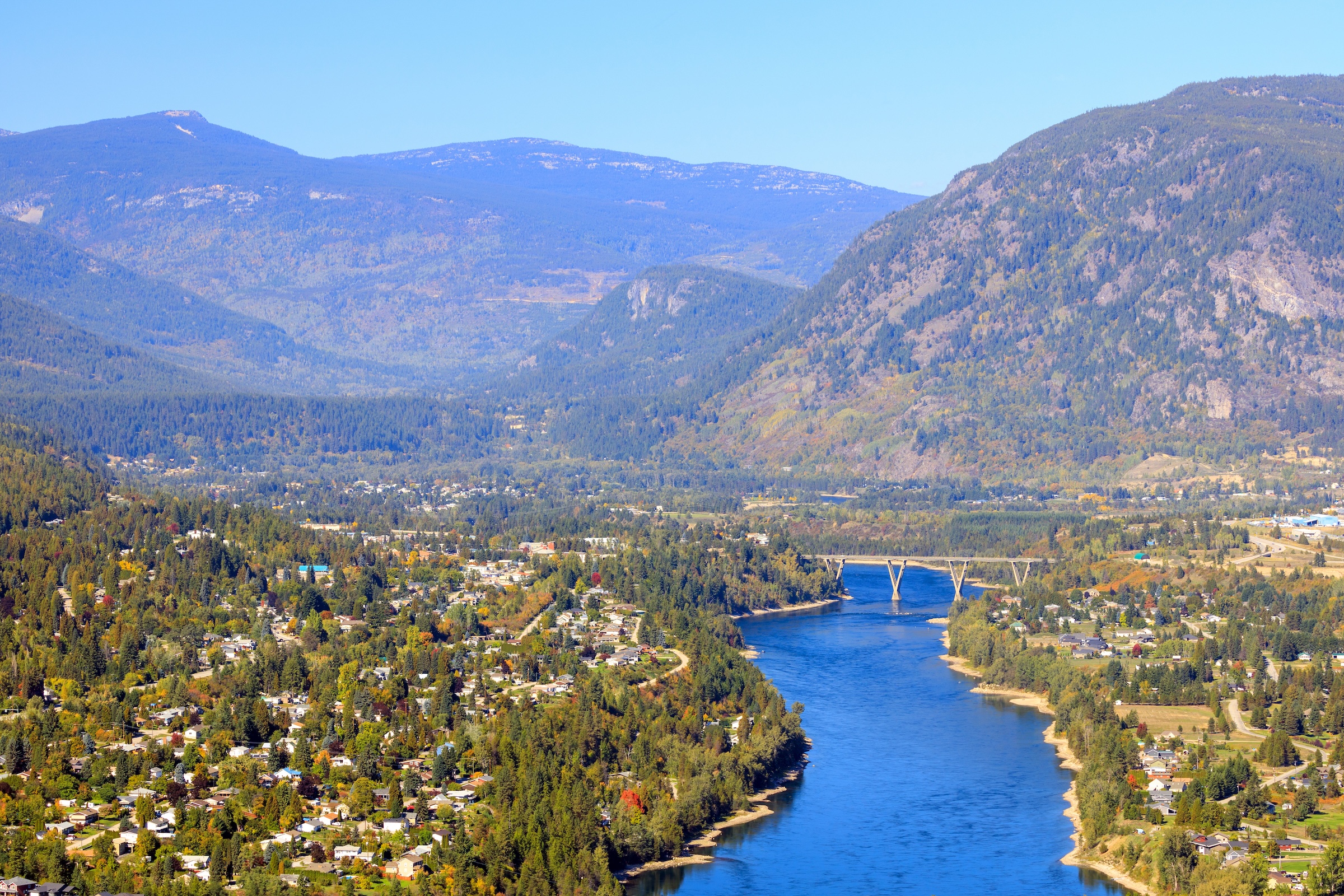
Castlegar sits at the junction of the Columbia and Kootenay Rivers and is one of the main service centres for the West Kootenay. It has the regional airport, Selkirk College, larger commercial areas and plenty of newer residential development. Many town founders had Russian heritage and this is still proudly evident in the area.
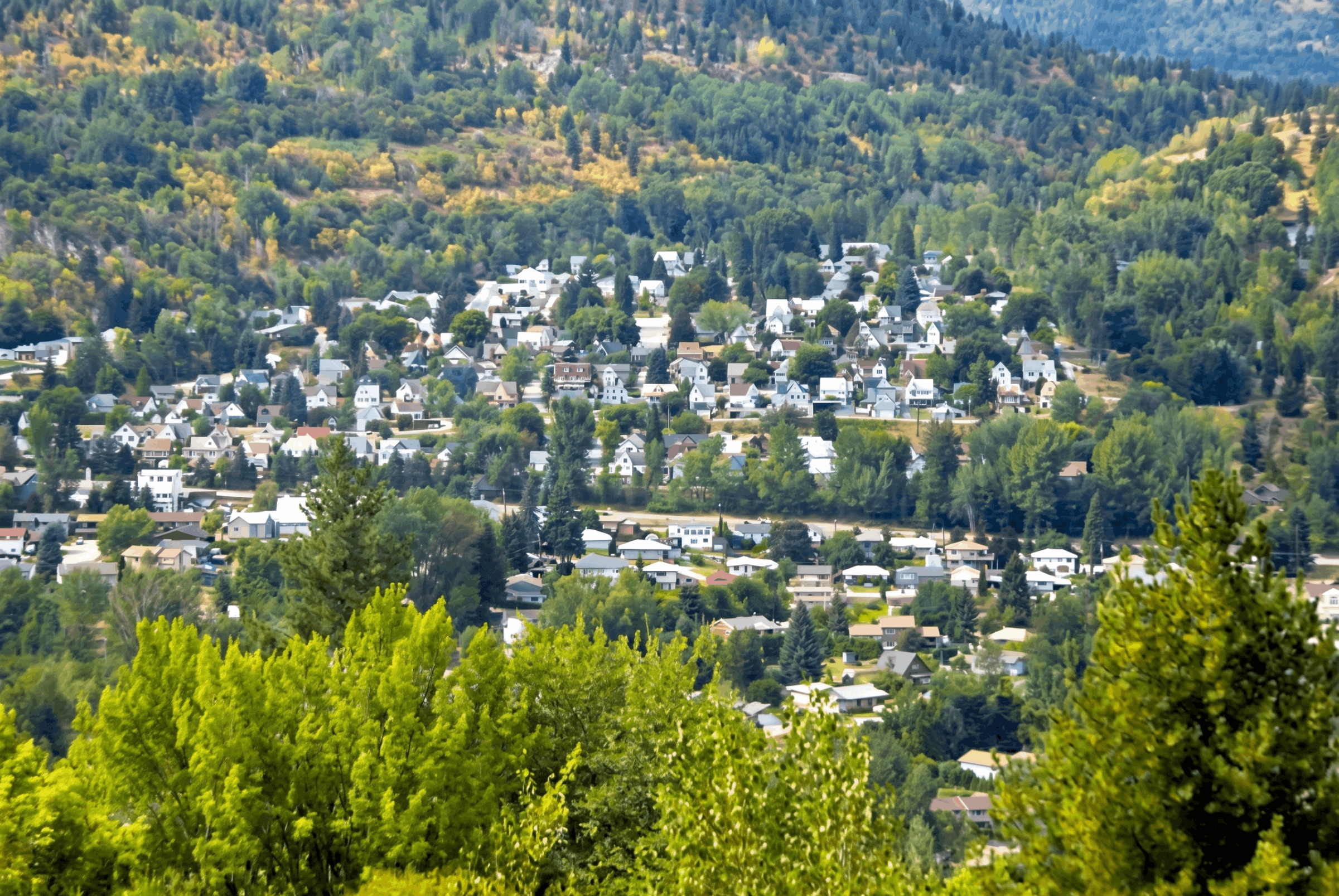
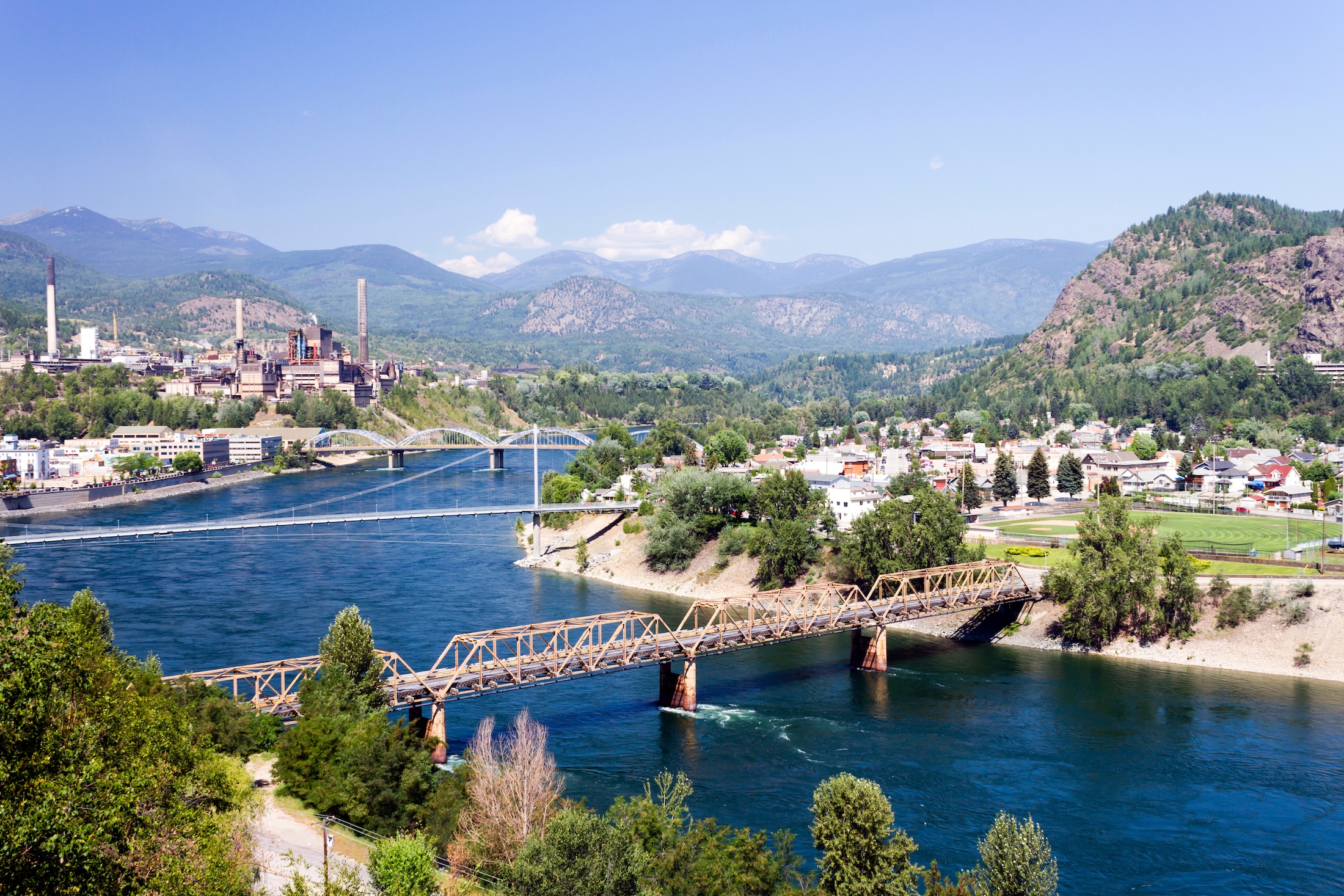
Trail is an older industrial and residential community also located on the Columbia River. The city grew around the smelter and has a long history as one of the economic centres of the Kootenay Boundary. Its neighbourhoods climb up the hillsides above the river, giving many homes some pretty impressive views. Early settlement by workers drawn to the opportunities at the smelter has contributed to a uniquely Italian feel that continues to this day.
The difference is easy to see when you’re house hunting.
Castlegar tends to feel more spread out and suburban. Trail feels more established, compact and neighbourhood-oriented.
And yes, those hills in Trail matter. They affect the views, the lots, the streets, the snow and sometimes how much you want to carry your groceries.
How Do Home Prices Compare?
This is one area where buyers should look at the actual neighbourhood and property rather than simply comparing city-wide averages.
| Castlegar | Trail | |
| Housing character | More newer construction | More established housing stock |
| Lot character | Generally larger and flatter | Often smaller, sloped or hillside |
| New construction | More readily available | More limited |
| Older homes | Available | A large part of the market |
| Downtown living | Limited residential feel | More traditional town centre |
| Views | Available, especially around hillsides | Many hillside homes have river/mountain views |
Castlegar generally offers more choice if you’re looking for a newer home, a larger lot or a conventional subdivision.
Trail can offer more opportunities for buyers who don’t mind an older house and are willing to look beyond the cosmetic details. You can find character homes, established yards and neighbourhoods where the landscaping has had decades to grow.
The important thing is not simply “Which town is cheaper?”
It’s “What kind of property can I get for my budget in each town?”
What Does Everyday Life Look Like?
Castlegar: Practical, Convenient and Growing
Castlegar is the practical choice for a lot of people.
The regional airport is a major advantage if you fly regularly, and Selkirk College brings students and programs into the community. You’ll also find a good range of shopping, restaurants, services, schools and recreation facilities. The Castlegar Complex has swimming, full ice arena and community space.
There are newer subdivisions and more conventional family neighbourhoods, and the relatively flatter valley setting makes getting around easy.
If you want a home with a garage, yard and room for a family without necessarily climbing a steep hillside, Castlegar is worth a serious look.
It’s also a good base if your life involves travelling throughout the West Kootenay.
Trail: Established, Active and Full of Character
Trail has a different personality.
The community is built into the valley, with neighbourhoods climbing the hillsides above the Columbia River. Many homes are older, and that can mean more character — but also more projects.
Trail has a real sense of neighbourhood. Areas like Sunningdale, West Trail, Glenmerry, Tadanac and Shavers Bench each have their own feel, and buyers often end up choosing a neighbourhood as much as they choose a house.
Outdoor recreation is also close at hand. Mountain biking, hiking, skiing and fishing are all part of everyday life here, and Rossland and Red Mountain are just up the hill. The Trail Aquatic and Leisure Center is a full service fitness facility.
Hockey runs deep in Trail. The home of the Trail Smoke Eaters.
For buyers who like an established community and don’t mind a little topography, Trail can be a great fit.
Which Town Fits Your Lifestyle?
Before you fall in love with a house, think about how you’ll actually use the community.
- Fly regularly for work or family? Both communities have airports that service Vancouver routes.
- Want a newer home and larger yard? Castlegar will generally give you more options.
- Prefer older homes, mature trees and established neighbourhoods? Take a serious look at Trail.
- Want easy access to Rossland and Red Mountain? Trail puts you closer to the mountain.
- Want college programs and a larger regional shopping base? Castlegar.
- Want river and mountain views from an established neighbourhood? Trail has plenty of possibilities.
- Want to minimize hills and steep driveways? Castlegar is probably the easier choice.
- Don’t mind an older home with some updating potential? Trail can offer good value.
- Want to be close to both communities? The distance between Trail and Castlegar makes either one a reasonable base for working and playing in the wider region.
What About the Commute?
This is where living in the West Kootenay is different from living in a larger city.
Trail and Castlegar are close enough that people regularly live in one and work in the other. The drive is part of everyday life for many residents.
You might work in Trail, shop in Castlegar, fly out of the airport and spend Saturday skiing at Red Mountain.
That’s one of the advantages of this part of the Kootenays. You don’t necessarily have to get everything from the town you live in. It’s like one big community with each town being a separate neighbourhood.
The bigger question is whether you’re comfortable driving the highway in winter. The roads are maintained, but winter is winter. Give yourself enough time, run proper winter tires and, if you’re considering a move, drive the route in January before deciding where you want to live.
A sunny July drive doesn’t tell you much about your February commute.
Questions We Get Asked Before People Move Here
Is Trail cheaper than Castlegar?
It can be, particularly if you’re willing to consider an older home or do some updating. But pricing varies significantly by neighbourhood, property condition and lot.
Is Castlegar better for families?
Castlegar has plenty of family-oriented neighbourhoods, newer housing and recreation opportunities. Trail also has established family neighbourhoods, schools and community facilities. It really depends on the lifestyle you’re after.
Is Trail too industrial?
Trail’s industrial history is a big part of its identity, but residential neighbourhoods can feel quite separate from the industrial areas. It’s worth spending time in the specific neighbourhood you’re considering rather than judging the whole city from one location.
What about schools?
Both communities have schools and family-oriented neighbourhoods. If schools are a major factor in your move, look at the specific catchment area and programs available for the property you’re considering.
Can I live in Trail and work in Castlegar?
Absolutely. Many people commute between communities throughout the West Kootenay.
What if I want to ski at Red Mountain?
Trail has the advantage of being closer to Rossland and Red Mountain. Castlegar is still very accessible, but you’ll have a longer drive.
Which community has better resale potential?
That’s much more complicated than picking a winner. Location, neighbourhood, property condition, views, lot characteristics and price paid all matter. A well-priced, desirable property can outperform a mediocre property in a supposedly stronger market.
The Real Answer: Don’t Choose the City. Choose Your Lifestyle.
Trail and Castlegar are close enough that you don’t have to completely give up one community when you choose the other.
Live in Castlegar and you can still head to Trail for work, dinner or a live event at the Charles Bailey Theatre.
Live in Trail and Castlegar is close enough for shopping, the airport, college or a change of scenery.
And both put you within easy reach of the bigger West Kootenay playground — Rossland, sking, snowboarding, biking, golfing, ice arenas, the Columbia River, Kootenay Lake and miles of trails and backroads.
The best way to choose is to spend time in both communities. Drive the neighbourhoods. Go to the grocery store. Check out the schools. Try the commute. Walk around downtown. And, most importantly, imagine what an ordinary Tuesday looks like rather than what a sunny Saturday looks like.
Because you’re not really choosing between Trail and Castlegar.
You’re choosing where you want to live your everyday life.
We know both communities and the surrounding West Kootenay market, and we’re happy to help you figure out which one fits.
Have questions about buying or selling in Trail, Castlegar or the surrounding Kootenay Boundary? Get in touch and let’s talk about what you’re looking for.